

A live casino table is rarely one thing. There is the wheel or the card shoe, a camera pointed at it, the interface where stakes are entered, and a record that exists after the stream ends. The studio lighting and the presenter's patter sit on top of all that. The atmosphere feels like a single continuous event, and that is the point of the design. But the equipment and the software can disagree about what happened, and a reference card game in a catalogue is not the same object as a streamed table with a dealer standing in front of it.
The roulette and blackjack details below stay inside what Evolution's own product pages say. They describe family structures and named variants, not what any particular operator offers, and certainly not a Megapari catalogue. Where an Indian card title appears, it is an external catalogue reference, not a confirmed streaming table. Treat the equipment as physical and the screen as a representation; the two are usually aligned, and the exceptions are where careful reading pays off.
Equipment, camera and the software state
The live feed documents the physical equipment: a wheel, a shoe, a dealt card. The game state is software's summary of the same action, and it drives settlement. Usually the two agree, and the round reads smoothly. When a stream lags or an overlay looks stale, the video and the state are simply different evidence about one event. Which one governs is set by the terms you actually accepted, so know the named game before assuming.
Published product descriptions show how much variation sits inside one supplier family. Evolution distinguishes its European and French single-zero layouts from American double-zero roulette, and it describes Auto Roulette as a physical automated wheel with no live dealer. Its blackjack family sets classic seven-seat tables against Infinite shared-initial-hand play, and it lists First Person Blackjack separately as animated random-number software. Those are family descriptions with a stated scope, not a promise about any operator's lobby.
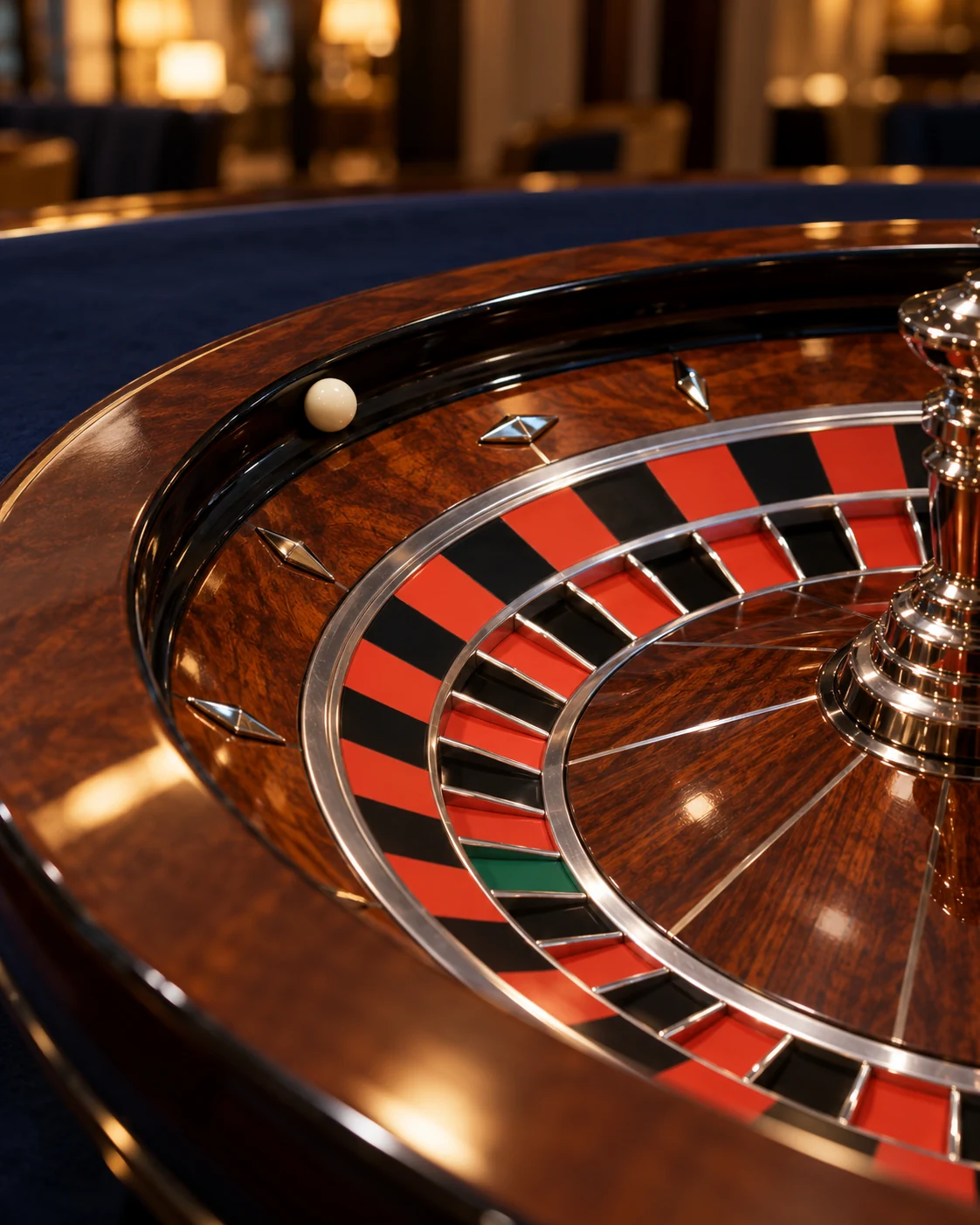
Betting windows overlap physical action
On a roulette table a wheel may already be turning while stakes are still being accepted, and where exactly the window closes can differ between named games and suppliers. Blackjack usually reads differently again, with decisions made hand by hand, while a shared-initial-hand variant splits the same opening into many personal choices. There is no universal sequence that every live table follows, so the named version's rules are the place to learn which stretch of the round belongs to you and which belongs to the dealer or the automated mechanism.
Four kinds of evidence can be compared around one round: what the video shows, what an animation depicts, what a confirmation screen records, and what a retained round record preserves. They are different artefacts about the same event, and which one carries weight is set by the terms of the named game you opened. That makes the version name part of the round itself, not a label you look past on the way to the wheel.
Single zero, double zero and what return means
A European or French wheel carries one zero pocket; an American layout carries two. That extra pocket spreads across the losing outcomes and changes the theoretical return you can expect over many identical spins. Theoretical return describes the long-run share of total stakes a game is designed to pay back, before any rounding or variation. A single round pays a particular stake at particular odds and tells you nothing about whether that design figure is being met.
Gross return and net profit are separate ideas. When a winning bet returns your stake plus winnings, the gross figure includes the part you put in; the net figure is only the change. A theoretical ratio applied to an evening is just arithmetic on an assumption, not a session forecast, and it does not imply a multiple of profit. Spreading chips over more numbers changes the shape of a round's outcome without moving the wheel away from its basic design.
Blackjack: one objective, different tables
Across named blackjack tables the basic objective is the same: a hand closer to twenty-one than the dealer's without exceeding it. The available actions, the treatment of a dealer total, and any side outcomes depend on the version you opened. Evolution's comparison of classic seven-seat tables with Infinite, which shares an initial hand, names two structures that look familiar but distribute decisions differently. Neither set of features should be carried across to unrelated tables.
Baccarat labels and round records
Baccarat is often described as a game with a short list of actions, yet drawing and commission arrangements vary by named version. This piece does not reproduce a third-card table, because a rule set you cannot trace to the specific table you are reading is worse than no rule at all. What transfers safely is the habit of treating the version name as part of the rules: two baccarat tables that look alike on screen may settle differently if their published arrangements differ, so open the version notes first.
A retained round record is useful evidence, especially on a fast table. It can carry a round identifier, a time, the stake and the result. But it is not a universal judge above every other source; the relevant named terms decide how evidence is compared and what happens next. Keep the record of a round you care about, and read the published terms next to it. The record and the terms together give you something concrete to work from.
Indian card references in an external catalogue
Teen Patti is a familiar name for three-card play, and Andar Bahar is a matching-card game, but a catalogue entry is documentation, not a dealer. The supplied external catalogue lists a three-card Teen Patti title under Jackpotter and Rich88 and an Andar Bahar title under Jackpotter and KA Gaming. It also lists social poker: Texas Hold'em from PlayWSOP, played with virtual chips and marked for ages twenty-one and over. None of these is evidence of a streaming table, and none is confirmed Megapari real-money supply.
Familiarity with a name is not the same as knowing a rules page. Three-card variants can differ in ranking and staking, and matching-card games can differ in how the match is determined, so the version on your screen decides. Social poker with virtual chips is a further category again, with its own age restriction and no cash stake. Treat all of these as context beside the live tables: useful references for genre and culture, not proof that a camera and dealer are behind the interface.
Phones, accounts and where support fits
This article uses plain text and photographic illustrations and reads in a phone browser; readers can adjust their own browser text settings for comfort. Nothing here describes how Megapari presents currency, languages or interface controls, as those were not verified, and no app availability is implied. Supplied product descriptions establish only the named documented versions, not Megapari inventory, supplier relationships or UI configuration.
Account and support context is part of the same picture. This publication is independent: it does not hold a connected player account, run real-money games, or process deposits and withdrawals. The protected account modal simply says preview access is coming soon, and the FAQ says real-money games and transactions are not connected. Real account, payment and help functions belong to the operator you actually use, so treat the full home utility notes as the place to look for those roles rather than this page.
A live table rewards a split attention: see the equipment, watch the interface, and keep the record of anything you may need to revisit. The camera makes the round feel present, but the named rules and the round's own evidence carry the facts. Named variants differ even inside one supplier family, and Indian card titles sit beside this subject as external references rather than confirmed streamed tables.
Megapari live tables remain an entertainment preview here, not an account you can play from this article. The clearest reading comes from knowing which layer you are looking at, and from treating what the version itself says as the starting point for every round.